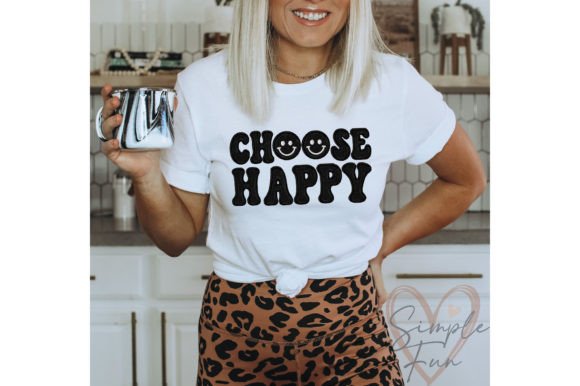
Choose Happy: A Designer’s Real-World Embroidery Review
First Impressions: Bright, Bold, and Built for Belonging
When I opened Choose Happy for the first time—not as a listing, but as a working embroidery file—I didn’t just see lettering. I felt its weight in context. It’s not cutesy or fragile; it’s grounded, optimistic, and quietly confident. The layout leans slightly organic—no rigid grid, no forced symmetry—but still holds strong visual rhythm. Curves soften the corners of the letters without sacrificing legibility. There’s breathing room between elements, which tells me this wasn’t rushed through auto-digitizing. As an experienced designer, that matters: it means Choose Happy was built to stitch cleanly, not just look good on screen.
A Tote Bag Test: Where Mood Meets Material
Last week, I used Choose Happy on a natural canvas tote for a local boutique’s spring launch. We chose medium-weight cotton twill, tear-away stabilizer, and soft matte polyester thread in warm charcoal. The result? Instant warmth. Not flashy—just honest, handmade presence. Customers paused at the rack. One picked it up, smiled, and said, “I needed this today.” That’s the quiet power of well-executed inspirational embroidery: it lands emotionally *because* the stitching is clean, balanced, and tactile—not because it shouts.
Where Choose Happy Shines (and Why)
- Custom apparel: Works beautifully on crewneck sweatshirts—stitch density holds up across ribbed fabric without puckering, especially with light cutaway stabilizer underneath.
- Tote bag design: Its open spacing prevents stiffness, so the bag stays functional and drape-friendly after embroidery.
- Baby embroidery: Soft curves and generous letterforms avoid sharp points—ideal for onesies and burp cloths where comfort and safety are non-negotiable.
- Holiday embroidery: Paired with cream linen tea towels or oatmeal knit blankets, it reads as thoughtful—not trendy—making it perfect for meaningful gifting.
- Etsy seller & small shop product: It reads as premium in mockups, especially when styled with neutral backdrops and natural lighting. No over-design needed.
Real Limits: When to Pause and Plan
Choose Happy isn’t magic—it’s a tool. And like any tool, its success depends on your setup. I’ve seen it struggle on ultra-thin rayon challis (too much give, too little support), and on heavily textured bouclé (fill stitches get lost in the pile). On dark fabric, contrast relies entirely on your thread choice—so test black thread on navy twill before committing. And while it scales down decently, don’t push it below 3.5 inches wide on a curved surface like a cap front: the inner curves start compressing, and satin stitch definition blurs.
Also worth noting: this is a machine embroidery design—not an applique design. So there’s no fabric layering involved, no raw edges to finish. That simplifies production for craft businesses, but also means you’re fully responsible for stitch integrity. If your hoop size is tight (say, under 4×4”), check whether the full phrase fits comfortably—or if you’ll need to split it. Always inspect the file for running stitch travel lines: long jumps can snag on delicate fabrics like silk or lightweight knits.
Design Assets That Build Trust
What makes Choose Happy more than just another inspirational embroidery file? It feels intentional—not generic. In a sea of “Good Vibes Only” and “Breathe” files, this one carries subtle distinction: the lowercase “h” in “happy” has a gentle upward flick, like a quiet nod. That kind of detail builds brand consistency for Etsy sellers who curate cohesive collections. It also increases perceived value in finished products: customers notice when letterforms have personality, not just placement.
For handmade product creators, that translates directly to trust. When someone buys an embroidered pillow cover with Choose Happy, they’re not just buying decor—they’re buying intentionality. Same goes for personalized gifts: monogrammed baby blankets with this phrase feel tender and considered, not mass-produced. And for commercial embroidery shops? It’s reliable repeat work—clean stitch paths, minimal trims, no nested underlay chaos.
Practical Designer Notes Before You Stitch
- Test the embroidery file on scrap fabric *first*—especially if using textured, stretchy, or dark material.
- Check thread color contrast in both daylight and indoor lighting; what reads clearly on screen may disappear on black denim.
- Review stitch density visually—look for heavy fill areas that could stiffen lightweight garments.
- Confirm hoop size compatibility before hooping expensive fabric.
- Inspect small details: does the curve of the “y” hold shape at your intended size? Zoom in.
- Run a black-and-white printable mockup—this reveals balance and hierarchy faster than color ever will.
- Use appropriate stabilizer: cutaway for knits, tear-away for stable wovens, fusible for lightweight linens.
- Verify licensing terms before selling finished items or bundling the digital embroidery file—this is essential for Etsy sellers and digital product creators.
Final Thought: Not Just Words—Wearability With Heart
Choose Happy doesn’t try to be everything. It’s not ornate. It’s not minimalist to the point of coldness. It lives in that rare middle ground: joyful but grounded, simple but distinctive, versatile but never vague. Whether you’re stitching it onto a nurse’s scrub top, a teacher’s apron, a wedding guest towel, or a custom cap for a mental health nonprofit, it carries weight because it’s designed to *work*, not just decorate.
That’s the mark of a truly useful embroidery design—not how many times it’s downloaded, but how often it becomes part of something real: a gift held close, a uniform worn with pride, a small shop’s signature touch. If you’re choosing embroidery for meaning, not just momentum, Choose Happy earns its place—not as filler, but as foundation.