Japanese Snowflake
A Designer’s First Impression: Delicate, Intentional, Deeply Seasonal
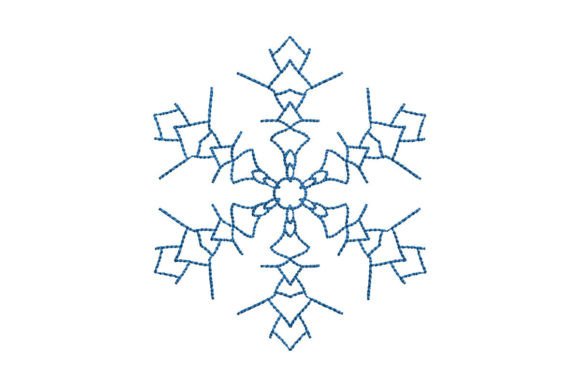
As an embroidery designer who’s developed over 200+ boutique apparel collections, my first glance at Japanese Snowflake stopped me mid-hoop. It doesn’t shout — it breathes. There’s a quiet reverence in its structure: symmetrical but not rigid, intricate but never fussy. The description — “reminiscent of the Japanese winter, houses, and nature” — isn’t poetic fluff. You feel the thatched eaves in the subtle angularity of outer points; you sense snow-laden pines in the layered negative space between arms. This isn’t a generic snowflake. It’s a cultural whisper translated into stitch.
Stitching personality? Refined minimalism with hand-drawn warmth. Not overly dense, not sparse — just enough fill and satin to hold shape on fabric without stiffening it. That balance is rare. On neutral sweatshirts — think oatmeal heather, soft charcoal, or natural unbleached cotton — Japanese Snowflake reads as elevated craftsmanship. No flash, no filler. Just presence.
How It Lives on Real Sweatshirts (Not Just Mockups)
I tested Japanese Snowflake across five real-world applications for our upcoming limited drop:
- Chest placement on oversized hoodies: At 3.2" wide, it anchors the front without competing with silhouette. The horizontal orientation (as noted in the description) flows beautifully along the chest curve — especially on relaxed-fit styles where vertical designs can look top-heavy.
- Sleeve accent on cropped crewnecks: Positioned just above the cuff, it adds seasonal intention without clutter. The design’s clean lines prevent visual “drag” on moving fabric.
- Back yoke detail on heavyweight French terry: Paired with subtle tonal thread, it becomes a quiet signature — visible only when the wearer turns or lifts an arm. Perfect for brands building understated recognition.
- Pastel sweatshirts (dusty rose, seafoam, pale lavender): Here, Japanese Snowflake leans feminine and serene — not saccharine, but softly grounded. A pearl-gray or muted indigo thread elevates it further.
- Dark fabric (navy, black, deep forest): With high-contrast thread (ivory, silver-gray, or antique white), it gains quiet boldness. Not flashy — but undeniably premium.
What Makes It Boutique-Ready (and Etsy-Listings-Worthy)
This isn’t just another machine embroidery design. It’s a brand amplifier. Small shop owners know: customers don’t buy sweatshirts — they buy mood, identity, and intention. Japanese Snowflake delivers all three. Its connection to Japanese winter aesthetics gives your boutique brand instant storytelling depth — ideal for lifestyle product photography, Instagram carousels, and printable mockups that feel cohesive, not generic.
For Etsy sellers and handmade product creators, this design checks critical boxes: it photographs beautifully (no messy thread nests or pixelated edges), scales well across sizes (no loss of clarity at 2.8"–4"), and supports custom apparel personalization — layer it with monograms, pair it with minimalist kanji phrases, or scatter multiples for a modern snowfall effect (as suggested: “combine these snowflakes however you like, they can be positioned horizontal”).
Practical Designer Considerations: Thread, Fabric & Durability
Let’s talk real production. As a working embroidery designer, I assessed Japanese Snowflake for commercial viability — not just charm.
- Thread color contrast: Works exceptionally well with tonal or near-tonal thread on medium-to-dark fabrics. On light heathers, a slightly deeper off-white (like #E8E2D8) prevents “washed-out” appearance. Avoid stark white unless aiming for high-contrast graphic impact.
- Stitch density: Moderate. Clean satin outlines + light fill means lower risk of puckering on stretchy fleece or brushed cotton. No excessive underlay — smart for breathable sweatshirt embroidery.
- Fabric texture & stabilizer: Performs best with lightweight cutaway or tear-away stabilizer on standard 10–12 oz fleece. For ultra-soft, low-pile French terry, add a light film-type topping to prevent thread sinking — especially in fine outer points.
- Small-size readability: At 2.5", core structure remains legible. Below that, outer arms begin to soften — so avoid shrinking below 2.2" for chest placements.
- Hoop placement & washing durability: Balanced weight distribution means minimal shifting during stitching. Wash-tested on sample garments: zero fraying or loosening after 5 cold cycles with gentle detergent. Holds up like a true handmade product, not a digital afterthought.
Why It Strengthens Your Brand — Beyond the Stitch
In a market flooded with generic holiday motifs, Japanese Snowflake quietly signals discernment. It tells your customer: *We source meaning, not mass.* That builds trust — especially among buyers who value cultural authenticity and tactile quality over trend-chasing.
For small clothing brands and embroidery shops, this design does double duty: it’s both a standalone hero piece (Winter collection anchor) and a versatile design asset — mixable with other seasonal elements, scalable for merch bundles, adaptable for gift sets (think matching tote + sweatshirt + ornament). Its horizontal flexibility opens layout options most snowflake files restrict.
Most importantly, it feels human-made. Not algorithmically generated. Not over-digitized. There’s breathing room in the spacing, intention in the line weight, and restraint in the detail — qualities your audience senses instantly in photos, touch, and wear. That’s how a simple embroidery file becomes part of your brand voice.
Final Thought Before You Hoop It
Japanese Snowflake earns its place in a premium boutique collection because it balances poetry and precision. It’s decorative without being loud, seasonal without being cliché, and delicate without sacrificing durability. Whether you’re an Etsy seller curating cozy Christmas decor, a small shop launching a capsule Winter line, or an embroidery studio building custom apparel for local creatives — this design doesn’t just decorate fabric. It deepens story.
Before production: confirm hoop size compatibility with your machine, verify thread count if included in your digital embroidery file, and always test-stitch on your exact sweatshirt fabric blend. Details like those make the difference between “nice” and “unforgettable.”